Does an AI That Remembers You Actually Understand You? What ChatGPT's Memory Rollout and 2025-2026 Research Reveal
记得你的 AI 真的理解你吗?ChatGPT 记忆功能上线与 2025-2026 研究揭示了什么
In 2025 the biggest consumer-AI story was memory: ChatGPT began referencing *all* your past conversations. But 'remembering everything' is not the same as 'understanding you.' 2025-2026 evidence shows memory without a personal baseline and without user visibility can erode trust. KK Research separates what is proven from KK's own hypothesis, and ties it to the 11-dimension Human Model.
2025 年消费级 AI 最大的故事是“记忆”:ChatGPT 开始引用你*所有*过往对话。但“记住一切”不等于“理解你”。2025-2026 的证据表明,没有个人基线、没有用户可见性的记忆会侵蚀信任。KK 研究将已证内容与 KK 自身假设区分开,并关联到 11 维 Human Model。
KKMatch Human Intelligence Research TeamKKMatch 人类智能研究团队· Research Lead: KK Research· Published: 2026-09-18· Reviewed by: KK Research· 11 min read
Executive Summary
执行摘要
Memory became the new battleground of consumer AI in 2025. OpenAI rolled ChatGPT memory from a small test (Sept 2024) to 'references all your past conversations' (April 10, 2025) to free users (June 3, 2025); Google's Gemini shipped a similar capability in Feb 2025. The pitch: AI that 'gets to know you over your life.' But three independent 2025-2026 signals complicate the hype: (1) a 2025 pilot study found that adding memory without letting users see it reduced positive assessments of the chatbot, while memory with a visualization improved them; (2) 2025-2026 industry surveys show a stark privacy paradox — users want memory but increasingly fear it (82% call AI data-loss-of-control a serious threat; 27% now refuse to share any data with AI agents); (3) 2026 regulation (EU AI Act fully applicable Aug 2026; Spain's AEPD published a 71-page technical guide on AI-agent memory in Feb 2026) is making 'remember everything' a compliance liability. KK's position: durable human-AI trust comes from a baseline-relative, user-visible Human Model — not from hoarding facts. We turn this into a falsifiable hypothesis (KH-014) and a first-party experiment.
记忆在 2025 年成为消费级 AI 的新战场。OpenAI 把 ChatGPT 记忆从小范围测试(2024-09)扩展到“引用你所有过往对话”(2025-04-10),再到免费用户(2025-06-03);Google 的 Gemini 在 2025-02 也上线了类似能力。卖点是:AI“在生命中逐渐了解你”。但三条独立的 2025-2026 信号让炒作变得复杂:(1) 一项 2025 试点研究发现,加入记忆但不让用户看见会降低对聊天机器人的正面评价,而带可视化的记忆则提升了评价;(2) 2025-2026 行业调查显示一个尖锐的隐私悖论——用户想要记忆,却日益恐惧它(82% 认为 AI 数据失控是严重威胁;27% 现在拒绝向 AI 代理分享任何数据);(3) 2026 年监管(欧盟 AI 法案于 2026-08 全面适用;西班牙 AEPD 于 2026-02 发布 71 页 AI 代理记忆技术指南)正让“记住一切”变成合规负担。KK 的立场:持久的人机信任来自相对基线、用户可见的 Human Model,而非囤积事实。我们将其转化为一个可被证伪的假设(KH-014)与一项第一方实验。
Memory is understanding only when it is baseline-relative and visible
只有当记忆相对基线且可见时,它才是理解
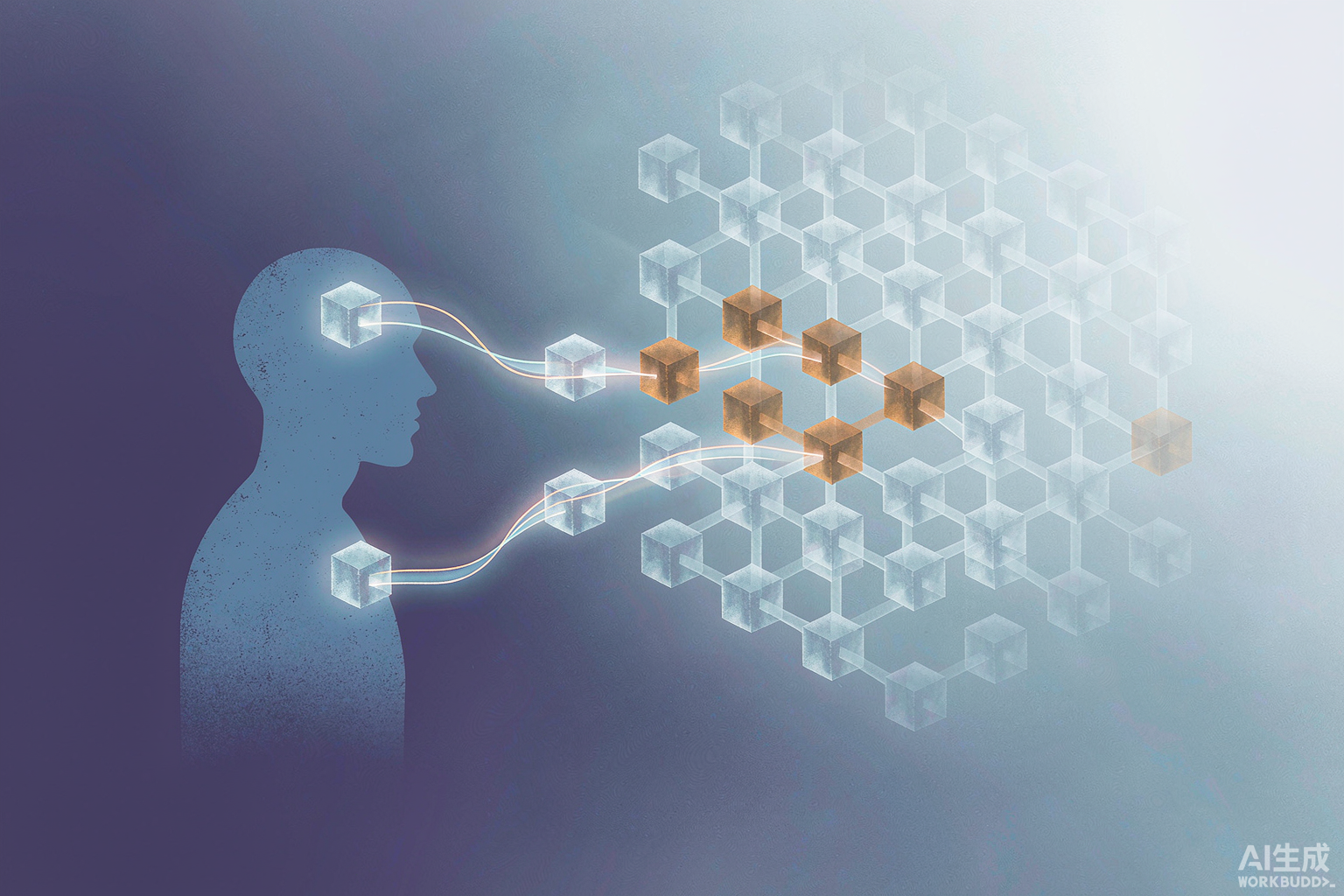
A person connected by gentle threads to a structured personal model. KK's claim: durable human-AI trust comes from a baseline-relative, user-visible Human Model — not from hoarding facts (KH-014).一个人以柔和的线索连接到结构化的个人模型。KK 的主张:持久的人机信任来自相对基线、用户可见的 Human Model,而非囤积事实(KH-014)。
Generated illustration for KK Research (concept: KH-001 / KH-003 / KH-014).
KK Research 生成的示意插图(概念:KH-001 / KH-003 / KH-014)。
The privacy paradox: users want memory but fear it
隐私悖论:用户想要记忆,却恐惧它
Share of consumers expressing concern about AI memory, from 2025-2026 industry surveys (as reported by chanl.ai, 2026). Users want continuity yet increasingly fear surveillance — memory without user control erodes trust (Nottingham 2025).对 AI 记忆表示担忧的消费者占比,来自 2025-2026 行业调查(chanl.ai 2026 引述)。用户想要连续性,却日益恐惧被监视——无用户控制的记忆会侵蚀信任(Nottingham 2025)。
Source: Relyance AI survey (Dec 2025) and a 2026 industry survey, as reported by chanl.ai (2026). Industry-reported figures, not independently replicated.
来源:Relyance AI 调查(2025-12)与 2026 行业调查,chanl.ai(2026)引述。行业报告数据,未经独立复现。
KK Interpretation
KK 解读
The research converges on a point KK has argued since KH-001 and KH-003: what makes an AI 'know you' is not the volume of facts it stores, but whether those facts are modeled relative to your personal baseline and made visible and correctable to you. ChatGPT's 'saved memories' and 'chat history' are flat fact-recall — they remember that you own a coffee shop, but they do not model your Personal Baseline (your typical tone, rhythm, state trajectory) the way the 11-dimension Human Model does. The Nottingham result is the key: memory alone reduced trust, but memory users could see (visualization) restored it. For KKMatch, this is why the Human Model is user-visible by design — the user can inspect and edit their own model — and why the model is baseline-relative, not a pile of facts. This is KH-005 (personalization = changing strategy) and KH-006 (Interaction Adaptation) operating in the memory layer: memory only earns trust when it changes how the system interacts, and when the user can see and steer it.
研究汇聚到 KK 自 KH-001 与 KH-003 就主张的一点:让 AI“了解你”的,不是它存储事实的量,而是这些事实是否相对于你的个人基线建模、并对你可见且可纠正。ChatGPT 的“已保存记忆”与“聊天记录”是扁平事实回忆——它记得你开了家咖啡店,却不像 11 维 Human Model 那样建模你的个人基线(你典型的语气、节奏、状态轨迹)。Nottingham 的结果是关键:仅记忆降低了信任,而用户能看见(可视化)的记忆挽回了信任。对 KKMatch 而言,这正是 Human Model 默认对用户可见的原因——用户可查看并编辑自己的模型——也是模型相对基线而非事实堆砌的原因。这是 KH-005(个性化=改变策略)与 KH-006(交互适应)在记忆层的运作:只有当记忆改变了系统的交互方式、且用户能看见并驾驭它时,记忆才赢得信任。
KK Original Hypothesis KK Original Hypothesis
KK 原创假设 KK Original Hypothesis
KK Hypothesis (KH-014, extending KH-001, KH-003, KH-005, KH-006, KH-010): AI memory that preserves a user's Personal Baseline and Trait+State trajectory across sessions — structured, baseline-relative, and user-visible — predicts calibrated long-term trust and re-engagement better than flat fact-recall memory (the 'saved memories' model). We predict that, at equal 'amount remembered,' a baseline-relative memory condition yields higher 30-day retention and higher calibrated-trust scores than a flat fact-recall condition, and that adding memory observability (a view/edit UI) recovers the trust lost by memory alone (consistent with Nottingham 2025). This is a KK-original, falsifiable claim; it is NOT established science.
KK 假设(KH-014,扩展 KH-001、KH-003、KH-005、KH-006、KH-010):保留用户个人基线与Trait+State轨迹的 AI 记忆——结构化、相对基线、且用户可见——比扁平事实回忆记忆(“已保存记忆”模型)更能预测校准后的长期信任与再互动。我们预测:在“记住量相等”下,相对基线的记忆条件比扁平事实回忆条件产生更高的 30 天留存与更高的校准信任分数,且加入记忆可观测性(查看/编辑界面)能挽回“仅记忆”损失的信任(与 Nottingham 2025 一致)。这是 KK 原创、可被证伪的主张,并非既定科学结论。
KK Experiment & Data
KK 实验与数据
KK Experiment design (first-party, consented): In Human Mirror sessions, randomly assign returning consented users to one of three memory conditions — (A) flat fact-recall (stores explicit facts only), (B) baseline-relative Human Model (stores traits + state trajectory relative to the user's personal baseline, KH-001/KH-003), and (C) baseline-relative + observability UI (users can view/edit their model). Hold 'amount remembered' approximately equal across conditions. Outcome metrics: 30-day behavioral retention and a post-session calibrated-trust scale (do you trust it because it is useful, not because it is invasive?). Prediction (KH-014): B > A on retention and calibrated trust; C recovers the trust gap observed in A vs no-memory, matching the Nottingham visualization effect. We will publish results once n >= 200 returning, consented users per condition.
KK 实验设计(第一方、已获同意):在 Human Mirror 会话中,把回访的已同意用户随机分配到三种记忆条件之一——(A) 扁平事实回忆(仅存显式事实)、(B) 相对基线的 Human Model(相对于用户个人基线存储特质 + 状态轨迹,KH-001/KH-003)、(C) 相对基线 + 可观测性界面(用户可查看/编辑自己的模型)。各条件“记住量”大致相等。结果指标:30 天行为留存与结束后校准信任量表(你信任它,是因为它有用,而非因为它 invasive?)。预测(KH-014):B > A(留存与校准信任);C 挽回 A 相对于无记忆所观察到的信任缺口,与 Nottingham 的可视化效应一致。各条件回访、已同意用户 n >= 200 后我们将公布结果。
Originality & Evidence Policy — Original Research
原创性与证据政策 — 原始研究
Three real, current sources (grade S/A): (1) OpenAI, 'Memory and new controls for ChatGPT' (official product post, updated Sep 5 2024 / Apr 10 2025 / Jun 3 2025): memory moved from a manual 'save this' feature (Sep 2024 test) to automatically referencing all past conversations (Apr 10 2025, Pro/Plus), then a lightweight version for free users (Jun 3 2025). The post states memory works as both 'saved memories' (explicit) and 'chat history' (insights gathered automatically), and that users can view, delete, or disable it. Users in the EEA, UK, Switzerland, Norway, Iceland and Liechtenstein were excluded at launch. Sam Altman called it 'a surprisingly great feature' pointing to 'AI systems that get to know you over your life.' (2) Yan, Fischer & Clos (2025), 'Remembering Things Makes Chatbots Sound Smarter, but Less Trustworthy' — a pilot user study (ACM Conference on Conversational User Interfaces, Waterloo, July 2025; University of Nottingham repository). They compared three conditions — no memory, memory alone, memory with visualization (a knowledge-graph view, 'MemoryGraph') — on likeability, perceived intelligence, and perceived safety. Preliminary finding: adding memory without visualization reduced positive assessments versus baseline, while memory with visualization improved them. Limitations: pilot, small/skewed sample, self-reported ratings, directional only (no exact effect sizes reported). (3) chanl.ai (2026), 'Your AI agent remembers everything — should your customers be worried?' — an industry analysis citing named 2025-2026 surveys and regulation: a Relyance AI survey (Dec 2025) found 82% of consumers see AI-related loss of data control as a serious threat; the Braze 2026 Customer Engagement Review found a +30% loyalty lift when companies use data to accurately predict needs; and 27% of consumers (2026) refuse to share any data with AI agents. It also documents the 2026 regulatory wave (EU AI Act fully applicable Aug 2026; Spain's AEPD 71-page guide on AI-agent memory, Feb 2026; California AB 1008 requiring model-level deletion of personal data).
三条真实、当前的来源(S/A 级):(1) OpenAI《ChatGPT 的记忆能力与全新控制功能》(官方产品公告,2024-09-05 / 2025-04-10 / 2025-06-03 更新):记忆从手动“记住这个”功能(2024-09 测试)扩展到自动引用所有过往对话(2025-04-10,Pro/Plus),再到免费用户的轻量版(2025-06-03)。公告称记忆既有“已保存记忆”(显式),也有“聊天记录”(自动收集的洞察),用户可查看、删除或关闭。EEA、英国、瑞士、挪威、冰岛、列支敦士登的用户在首发时被排除。Sam Altman 称其为“一个出奇好用的功能”,指向“在生命中逐渐了解你的 AI 系统”。(2) Yan、Fischer 与 Clos(2025)《记得事情让聊天机器人听起来更聪明,却更不值得信任》——一项试点用户研究(ACM 对话式用户界面大会,滑铁卢,2025-07;诺丁汉大学知识库)。他们比较了三种条件——无记忆、仅记忆、带可视化(知识图谱视图 “MemoryGraph”)——在好感度、感知智能与感知安全性上的表现。初步发现:加入记忆但无可视化会降低相对基线的正面评价,而带可视化的记忆则提升了评价。局限:试点、小且偏斜样本、自陈评分、仅方向性(未报告精确效应量)。(3) chanl.ai(2026)《你的 AI 代理记得一切——你的客户该担心吗?》——一篇引用具名 2025-2026 调查与监管的行业分析:Relyance AI 调查(2025-12)显示 82% 消费者认为 AI 相关的数据失控是严重威胁;Braze 2026 客户互动评估显示,当企业用数据准确预测需求时忠诚度提升 +30%;2026 年 27% 消费者拒绝向 AI 代理分享任何数据。它还记录了 2026 监管浪潮(欧盟 AI 法案 2026-08 全面适用;西班牙 AEPD 于 2026-02 发布 71 页 AI 代理记忆技术指南;加州 AB 1008 要求模型级删除个人数据)。
Strictly, the evidence shows: (a) leading products now treat cross-session memory as a core capability, and frame it as 'knowing you over your life' — this is a real, observed product direction, not a hypothesis; (b) memory's effect on trust is not automatically positive — in the only controlled pilot, memory without user-visible observability reduced positive assessments, while observability recovered them; (c) users hold a privacy paradox — they want continuity but increasingly fear surveillance, and a meaningful share now opt out of data sharing entirely; (d) regulators now treat AI memory as a distinct risk surface (erasure, minimization, compartmentalization). It does NOT show that any specific memory architecture (baseline-relative vs flat fact-recall) causally produces better long-term trust or retention, nor that 'referencing all past conversations' equals 'understanding the user.'
严格地说,证据表明:(a) 主流产品现已把跨会话记忆当作核心能力,并将其框定为“在生命中了解你”——这是真实的、被观察到的产品方向,不是假设;(b) 记忆对信任的影响并非自动为正——在唯一受控试点中,无用户可见性的记忆降低了正面评价,而可见性挽回了评价;(c) 用户存在隐私悖论——他们想要连续性,却日益恐惧被监视,且已有可观比例完全拒绝数据共享;(d) 监管者现在把 AI 记忆当作独立的风险面(删除权、最小化、隔离化)。它并未证明任何特定的记忆架构(相对基线 vs 扁平事实回忆)能因果地产生更好的长期信任或留存,也未证明“引用所有过往对话”等于“理解用户”。
Key Data
关键数据
- OpenAI memory timeline: manual test Sep 2024 -> references ALL past conversations Apr 10 2025 (Plus/Pro) -> lightweight for free users Jun 3 2025; EEA/UK/CH/NO/IS/LI excluded at launch.
- Nottingham (2025) pilot: 3 conditions (no memory / memory alone / memory + visualization); preliminary finding: memory alone < baseline on positive assessments; memory + visualization > baseline. No exact effect sizes reported (pilot, self-report).
- chanl.ai-reported surveys: 82% see AI data-loss-of-control as a serious threat (Relyance AI, Dec 2025); +30% loyalty when data predicts needs accurately (Braze 2026); 27% refuse to share ANY data with AI agents (2026).
- 2026 regulation: EU AI Act fully applicable Aug 2026; Spain AEPD 71-page AI-agent-memory guide Feb 2026; California AB 1008 model-level deletion.
- OpenAI 记忆时间线:手动测试 2024-09 -> 引用所有过往对话 2025-04-10(Plus/Pro)-> 免费用户轻量版 2025-06-03;EEA/英国/瑞士/挪威/冰岛/列支敦士登首发被排除。
- Nottingham(2025)试点:3 种条件(无记忆 / 仅记忆 / 带可视化);初步发现:仅记忆 < 基线(正面评价);记忆 + 可视化 > 基线。未报告精确效应量(试点、自陈)。
- chanl.ai 引述调查:82% 认为 AI 数据失控是严重威胁(Relyance AI,2025-12);数据准确预测需求时忠诚度 +30%(Braze 2026);27% 拒绝向 AI 代理分享任何数据(2026)。
- 2026 监管:欧盟 AI 法案 2026-08 全面适用;西班牙 AEPD 71 页 AI 代理记忆指南 2026-02;加州 AB 1008 模型级删除。
Methodology
研究方法
We reviewed one official product announcement (OpenAI, grade A for factual timeline), one peer-review-track pilot study (Nottingham, ACM CUI 2025, grade S), and one industry analysis (chanl.ai, 2026) that cites named 2025-2026 surveys (Relyance AI, Braze) and primary regulatory documents (EU AI Act, AEPD guide, California AB 1008). We separated product claims from evidence, flagged the Nottingham result as a directional pilot (no effect sizes), and treated the survey figures as industry-reported (not independently replicated). We did not treat 'memory shipped in a major product' as proof that any memory architecture earns trust.
我们回顾了一份官方产品公告(OpenAI,事实时间线 A 级)、一项同行评审通道的试点研究(Nottingham,ACM CUI 2025,S 级),以及一篇引用具名 2025-2026 调查(Relyance AI、Braze)与主要监管文件(欧盟 AI 法案、AEPD 指南、加州 AB 1008)的行业分析(chanl.ai,2026)。我们将产品主张与证据区分开,将 Nottingham 结果标注为方向性试点(无效应量),并把调查数据视为行业报告(未经独立复现)。我们未把“某大厂产品上线记忆”当作任何记忆架构能赢得信任的证明。
What It Means
这意味着什么
For the industry: 'remember everything' is necessary but not sufficient — and done wrong, it backfires (Nottingham 2025) and draws regulators (2026). The differentiator is not memory volume but baseline-relative modeling + user visibility. For KKMatch: the 11-dimension Human Model is exactly this — a user-owned, baseline-relative, inspectable memory that powers adaptation (KH-005/KH-006) and, via KH-010, can travel with the user across AI systems instead of being re-derived from scratch every session.
对行业:'记住一切'是必要但不充分的——做错了会适得其反(Nottingham 2025)并招致监管(2026)。真正的差异点不是记忆的体量,而是相对基线的建模 + 用户可见性。对 KKMatch:11 维 Human Model 正是如此——一个用户拥有、相对基线、可检视的记忆,驱动适应(KH-005/KH-006),并经由 KH-010 可随用户跨越不同 AI 系统,而非每轮会话从零重推。
Limitations
研究局限
Our central claim — that baseline-relative, user-visible memory beats flat fact-recall on trust and retention — is KK Hypothesis KH-014, without first-party confirmation yet. The Nottingham result is a directional pilot (small sample, self-report, no effect sizes). The survey figures are industry-reported (Relyance AI, Braze) and not independently replicated; the +30% loyalty lift is a relative measure, not a causal claim. Regional and product-specific variation in memory acceptance is large and under-explained.
我们的核心主张——相对基线、用户可见的记忆在信任与留存上优于扁平事实回忆——尚为 KK 假设 KH-014,暂无第一方验证。Nottingham 结果是方向性试点(小样本、自陈、无效应量)。调查数据属行业报告(Relyance AI、Braze),未经独立复现;+30% 忠诚度提升是相对度量,非因果主张。记忆接受度的地区与产品差异很大,且未被充分解释。
What Could Prove KK Wrong What Could Prove KK Wrong
什么可能证明 KK 错误 What Could Prove KK Wrong
If, across n >= 200 consented returning users per condition, a flat fact-recall memory matches baseline-relative memory on 30-day retention and calibrated trust at equal 'amount remembered,' KH-014 loses support. If adding memory observability does NOT recover the trust lost by memory alone (contradicting Nottingham 2025), the trust-eroding mechanism lies elsewhere (e.g., content sensitivity, not visibility). If users with visible memory show lower retention than those without (privacy backlash dominates), the whole 'memory as trust builder' framing is challenged for KKMatch.
Product: model memory as a baseline-relative, user-visible Human Model; ship a 'view/edit my model' control as a trust feature, not a settings afterthought; measure calibrated trust and retention, not just recall accuracy. GEO/brand: publish evidence-grade writeups that separate 'AI remembers everything' hype from 'AI understands you via a baseline-relative, inspectable model' — the defensible, differentiated narrative for KKMatch as a research-led relationship platform. Real case to watch: the 2026 EU/Spain memory-regulation wave will force exactly the compartmentalization and erasure KK's user-owned model already enables.
产品:把记忆建模为相对基线、用户可见的 Human Model;把“查看/编辑我的模型”作为信任功能交付,而非设置里的附属项;衡量校准信任与留存,而非仅回忆准确率。GEO/品牌:发布证据级内容,区分“AI 记住一切”的炒作与“AI 通过相对基线、可检视的模型理解你”——这是 KKMatch 作为研究驱动的关系平台可信且差异化的叙事。值得关注的真实案例:2026 年欧盟/西班牙的记忆监管浪潮,将迫使行业采用 KK 用户拥有模型早已支持的隔离化与删除能力。
Does ChatGPT remembering all my past conversations mean it understands me?
Not necessarily. OpenAI's 2025 rollout makes ChatGPT reference all past conversations, but 'referencing facts' is flat fact-recall, not understanding. The Nottingham (2025) pilot found memory alone could reduce trust unless users could see what was remembered. KK argues understanding requires a baseline-relative model (KH-001/KH-003), not just a longer memory.
Why does KK say memory observability matters so much?
Because the only controlled test we have (Nottingham 2025) showed memory without a visualization reduced positive assessments versus baseline, while memory with a visualization improved them. Letting users see and edit what an AI knows turns memory from surveillance into trust. KK's Human Model is user-visible by design (KH-014).
How is KK's Human Model different from ChatGPT's memory?
ChatGPT memory stores explicit 'saved memories' and auto-gathered 'chat history' — flat facts. KK's 11-dimension Human Model stores each user's Personal Baseline and Trait+State trajectory (KH-001/KH-003), is baseline-relative, user-visible/editable, and (per KH-010) can travel with the user across AI systems. The bet (KH-014) is that baseline-relative, visible memory earns more calibrated trust than flat recall.
Does ChatGPT remembering all my past conversations mean it understands me?
Why does KK say memory observability matters so much?
因为我们手头唯一受控的测试(Nottingham 2025)显示,无可视化的记忆相对基线降低了正面评价,而带可视化的记忆提升了评价。让用户看见并编辑 AI 所知,把记忆从监视变成信任。KK 的 Human Model 默认对用户可见(KH-014)。
How is KK's Human Model different from ChatGPT's memory?
ChatGPT 记忆存储显式的“已保存记忆”与自动收集的“聊天记录”——扁平事实。KK 的 11 维 Human Model 存储每位用户的个人基线与 Trait+State 轨迹(KH-001/KH-003),相对基线、用户可见/可编辑,并(按 KH-010)可随用户跨越不同 AI 系统。我们的赌注(KH-014)是:相对基线、可见的记忆比扁平回忆赢得更多校准信任。